Java 并发编程是后端开发的核心技能,本文涵盖线程基础、生命周期、创建方式及线程池配置。
线程的生命周期
线程的 6 种状态
NEW → RUNNABLE → (BLOCKED/WAITING/TIMED_WAITING) → TERMINATED| 状态 | 说明 | 触发条件 |
|---|---|---|
| NEW | 新建状态 | 创建 Thread 对象,未调用 start() |
| RUNNABLE | 可运行 | 调用 start(),可能正在运行或在等待 CPU 时间片 |
| BLOCKED | 阻塞 | 等待获取监视器锁(如 synchronized) |
| WAITING | 无限等待 | 调用 wait()、join()、LockSupport.park() |
| TIMED_WAITING | 限时等待 | 调用 sleep(ms)、wait(ms)、join(ms) |
| TERMINATED | 终止 | 线程执行完毕或异常退出 |
线程状态流转图
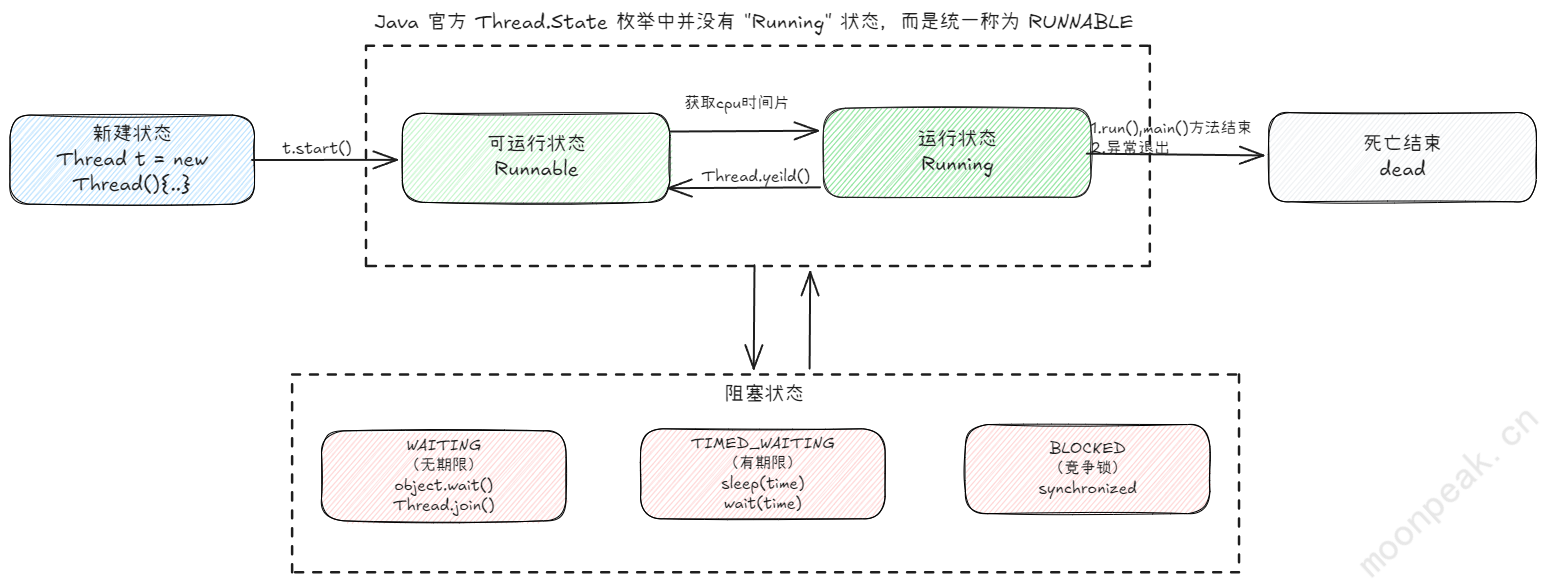
状态转换详解
┌─────────┐ start() ┌───────────┐│ NEW │ ──────────→ │ RUNNABLE │└─────────┘ └─────┬─────┘ │ ┌─────────────────────┼─────────────────────┐ │ │ │ ▼ ▼ ▼┌───────────────┐ ┌───────────────┐ ┌───────────────────┐│ BLOCKED │ │ WAITING │ │ TIMED_WAITING ││ (等待同步锁) │ │ (无限期等待) │ │ (限期等待) │└───────┬───────┘ └───────┬───────┘ └─────────┬─────────┘ │ │ │ │ lock acquired │ notify/interrupt │ timeout/interrupt └────────────────────┴──────────────────────┘ │ ▼ ┌─────────────┐ │ TERMINATED │ └─────────────┘线程的创建方式
Java 中有 4 种创建线程的方式:
// 方式一:继承 Thread 类class MyThread extends Thread {    @Override    public void run() {        System.out.println(Thread.currentThread().getName() + " 执行");    }}
// 使用MyThread thread = new MyThread();thread.start();
// 方式二:实现 Runnable 接口(推荐)class MyRunnable implements Runnable { @Override public void run() { System.out.println(Thread.currentThread().getName() + " 执行"); }}
// 使用Thread thread = new Thread(new MyRunnable());thread.start();
// Lambda 简化newThread(() ->System.out.println("线程启动")).start();// 方式三:实现 Callable 接口(可返回结果、可抛异常)class MyCallable implements Callable<String> { @Override public String call() throws Exception { Thread.sleep(1000); return "任务结果"; }}
// 使用(需要 FutureTask 包装)FutureTask<String> futureTask = new FutureTask<>(new MyCallable());new Thread(futureTask).start();
// 获取结果(阻塞)try { String result = futureTask.get(); System.out.println(result);} catch (Exception e) { e.printStackTrace();}// 方式四:使用线程池(最佳实践)ExecutorService executor = Executors.newFixedThreadPool(4);
// 提交 Runnable 任务(无返回值)executor.execute(() -> System.out.println("Runnable 任务"));
// 提交 Callable 任务(有返回值)Future<Integer> future = executor.submit(() -> { return 42;});
// 获取结果try { Integer result = future.get(5, TimeUnit.SECONDS);} catch (Exception e) { e.printStackTrace();}
// 关闭线程池executor.shutdown();四种方式对比
| 方式 | 优点 | 缺点 | 适用场景 |
|---|---|---|---|
| 继承 Thread | 简单直接 | 无法继承其他类,耦合度高 | 简单任务 |
| 实现 Runnable | 解耦任务和线程,可共享 | 无返回值 | 大多数场景 |
| 实现 Callable | 有返回值,可抛异常 | 需要 Future 获取结果 | 需要返回结果的任务 |
| 线程池 | 复用线程,可控管理 | 需要正确关闭 | 生产环境首选 |
Tip生产环境严禁使用
Executors的便捷方法创建线程池(有 OOM 风险),应使用ThreadPoolExecutor手动配置参数。
线程异常处理
异常影响
- 未捕获异常:导致线程终止执行,但不会影响其他线程或主线程
- 持有锁时异常:异常会释放当前线程持有的所有监视器锁(
synchronized) - 线程池中的异常:线程会被销毁,线程池会创建新线程替代
异常处理方式
1. 任务内 try-catch
new Thread(() -> { try { // 业务逻辑 int result = 1 / 0; // 可能抛出异常 } catch (Exception e) { System.out.println("捕获异常: " + e.getMessage()); }}).start();2. 设置未捕获异常处理器
Thread thread = new Thread(() -> {    int result = 1 / 0;});
// 设置线程级别的处理器thread.setUncaughtExceptionHandler((t, e) -> {    System.out.println("线程 " + t.getName() + " 发生异常: " + e.getMessage());    // 可记录日志、发送告警等});
// 或设置全局默认处理器Thread.setDefaultUncaughtExceptionHandler((t, e) -> {    System.err.println("全局异常捕获: " + e.getMessage());});
thread.start();
3. 线程池异常处理
// 包装 Callable/Runnable 捕获异常ExecutorService executor = Executors.newFixedThreadPool(4);
Future<?> future = executor.submit(() -> {    try {        // 任务逻辑        throw new RuntimeException("业务异常");    } catch (Exception e) {        // 方式1:任务内捕获        System.err.println("任务内捕获: " + e.getMessage());        throw e;  // 如需让外层感知,可重新抛出    }});
// 方式2:通过 Future.get() 捕获try {    future.get();} catch (ExecutionException e) {    System.err.println("执行异常: " + e.getCause().getMessage());}
4. 自定义 ThreadFactory
class ExceptionHandlingThreadFactory implements ThreadFactory {    private final AtomicInteger counter = new AtomicInteger(1);
    @Override    public Thread newThread(Runnable r) {        Thread thread = new Thread(r, "custom-pool-" + counter.getAndIncrement());        thread.setUncaughtExceptionHandler((t, e) -> {            System.err.println("线程池线程异常: " + t.getName() + ", 原因: " + e.getMessage());            // 记录日志、上报监控等        });        return thread;    }}
// 使用ExecutorService executor = new ThreadPoolExecutor(        2, 4, 60, TimeUnit.SECONDS,        new LinkedBlockingQueue<>(100),        new ExceptionHandlingThreadFactory());
线程池详解
ThreadPoolExecutor 核心参数
public ThreadPoolExecutor( int corePoolSize, // 核心线程数 int maximumPoolSize, // 最大线程数 long keepAliveTime, // 非核心线程空闲存活时间 TimeUnit unit, // 时间单位 BlockingQueue<Runnable> workQueue, // 任务队列 ThreadFactory threadFactory, // 线程工厂 RejectedExecutionHandler handler // 拒绝策略)任务提交流程
提交任务 │ ▼当前运行线程数 < corePoolSize? │ 是 ▼创建新线程执行任务 │ │ 否 ▼任务队列未满? │ 是 ▼加入任务队列等待 │ │ 否 ▼当前运行线程数 < maximumPoolSize? │ 是 ▼创建非核心线程执行任务 │ │ 否 ▼执行拒绝策略手写线程池配置(生产级)
public class MoonpeakThreadPool {
    // 获取 CPU 核心数    private static final int CPU_CORES = Runtime.getRuntime().availableProcessors();
    /**     * 创建 CPU 密集型线程池     * 适用于:复杂计算、数据处理、加密解密等     */    public static ThreadPoolExecutor createCpuIntensivePool() {        return new ThreadPoolExecutor(                CPU_CORES + 1,                    // 核心线程数:CPU + 1                CPU_CORES + 1,                    // 最大线程数:与核心数相同                0L,                               // 存活时间:0(核心线程不回收)                TimeUnit.MILLISECONDS,                new LinkedBlockingQueue<>(1000),  // 有界队列                new ThreadFactoryBuilder()                        .setNameFormat("cpu-pool-%d")                        .build(),                new ThreadPoolExecutor.CallerRunsPolicy()        );    }
    /**     * 创建 IO 密集型线程池     * 适用于:网络请求、数据库操作、文件读写等     */    public static ThreadPoolExecutor createIOIntensivePool() {        // IO 密集型:2 * CPU 或更高        int ioThreads = CPU_CORES * 2;        return new ThreadPoolExecutor(                ioThreads,                        // 核心线程数                ioThreads * 2,                    // 最大线程数                60L,                              // 空闲线程存活 60 秒                TimeUnit.SECONDS,                new LinkedBlockingQueue<>(5000),  // IO 场景队列可更大                new ThreadFactoryBuilder()                        .setNameFormat("io-pool-%d")                        .build(),                new ThreadPoolExecutor.CallerRunsPolicy()        );    }
    /**     * 创建混合型线程池(基于公式计算)     */    public static ThreadPoolExecutor createOptimizedPool(            double targetCpuUtilization,  // 目标 CPU 利用率 (0-1)            double computeTime,           // 计算时间            double waitTime) {            // 等待时间
        // 公式:线程数 = CPU 核心数 * 目标利用率 * (1 + 等待时间/计算时间)        int optimalThreads = (int) (CPU_CORES * targetCpuUtilization *                (1 + waitTime / computeTime));
        // 至少保留 2 个线程        optimalThreads = Math.max(optimalThreads, 2);
        return new ThreadPoolExecutor(                optimalThreads,                optimalThreads * 2,                60L, TimeUnit.SECONDS,                new LinkedBlockingQueue<>(1000),                new ThreadFactoryBuilder()                        .setNameFormat("optimized-pool-%d")                        .build(),                new ThreadPoolExecutor.CallerRunsPolicy()        );    }}
参数配置详解
1. 核心线程数 (corePoolSize)
| 场景 | 推荐值 | 原因 |
|---|---|---|
| CPU 密集型 | CPU + 1 | 减少上下文切换,+1 保证页缺失时 CPU 满载 |
| IO 密集型 | 2 * CPU 或更高 | 线程等待 IO 时释放 CPU,可多开线程 |
| 混合型 | 按公式计算 | 根据计算/等待时间比例动态调整 |
2. 最大线程数 (maximumPoolSize)
- 作用:应对突发流量,作为”临时工”
- 建议:通常为
corePoolSize * 2或更高 - 风险:过大导致频繁上下文切换,过小无法应对突发
3. 任务队列 (workQueue)
| 队列类型 | 特点 | 风险 |
|---|---|---|
LinkedBlockingQueue | 链表结构,默认无界 | 必须指定容量,否则 OOM |
ArrayBlockingQueue | 数组结构,有界 | 容量固定,需预估 |
SynchronousQueue | 不存储任务,直接移交 | 需要足够大的线程数 |
PriorityBlockingQueue | 优先级排序 | 需实现 Comparable |
Warning绝对不要使用无界队列!当生产者速度远大于消费者时,队列会无限增长导致 OOM。
4. 拒绝策略
| 策略 | 行为 | 适用场景 |
|---|---|---|
AbortPolicy (默认) | 直接抛出 RejectedExecutionException | 需要快速失败 |
CallerRunsPolicy | 由提交任务的线程(调用者)执行 | 推荐,产生回压保护系统 |
DiscardPolicy | 静默丢弃任务 | 可容忍丢任务 |
DiscardOldestPolicy | 丢弃队列最老的任务,重试提交 | 新任务优先 |
线程数计算公式
参数说明:
- 目标 CPU 利用率:通常 0.8~1.0
- 等待时间 (Wait):线程等待 IO、网络、锁的时间
- 计算时间 (Compute):线程实际 CPU 计算时间
计算示例:
CPU: 8 核目标利用率: 0.8计算时间: 100ms等待时间: 900ms (数据库查询)
线程数 = 8 * 0.8 * (1 + 900/100) = 6.4 * 10 = 64
线程池最佳实践
1. 优雅关闭线程池
public void shutdownGracefully(ExecutorService executor, long timeout, TimeUnit unit) { // 第一阶段:优雅关闭,等待已提交任务完成 executor.shutdown(); try { // 等待指定时间 if (!executor.awaitTermination(timeout, unit)) { // 第二阶段:强制关闭 executor.shutdownNow(); // 再次等待 if (!executor.awaitTermination(timeout, unit)) { System.err.println("线程池未完全关闭"); } } } catch (InterruptedException e) { // 被中断,强制关闭 executor.shutdownNow(); Thread.currentThread().interrupt(); }}2. 线程池监控
public class ThreadPoolMonitor {
    public static void printStats(ThreadPoolExecutor executor) {        System.out.println("===== 线程池状态 =====");        System.out.println("核心线程数: " + executor.getCorePoolSize());        System.out.println("最大线程数: " + executor.getMaximumPoolSize());        System.out.println("当前线程数: " + executor.getPoolSize());        System.out.println("活跃线程数: " + executor.getActiveCount());        System.out.println("任务队列大小: " + executor.getQueue().size());        System.out.println("已完成任务数: " + executor.getCompletedTaskCount());        System.out.println("总任务数: " + executor.getTaskCount());        System.out.println("拒绝任务数: " + getRejectedCount(executor));    }
    private static long getRejectedCount(ThreadPoolExecutor executor) {        // 需要通过自定义 RejectedExecutionHandler 来统计        return 0;    }}
3. 线程池隔离原则
// ❌ 错误:所有任务共用一个大池ExecutorService globalPool = Executors.newFixedThreadPool(100);
// ✅ 正确:按业务类型隔离// 1. 核心业务流程独立线程池ThreadPoolExecutor orderPool = createOrderThreadPool();// 2. 非核心任务另建线程池ThreadPoolExecutor reportPool = createReportThreadPool();// 3. 第三方调用单独线程池(防止拖垮主业务)ThreadPoolExecutor thirdPartyPool = createThirdPartyThreadPool();
速查表
| 问题 | 答案 |
|---|---|
| 线程启动方式 | start()(不能重复调用) |
| 线程休眠 | Thread.sleep(ms)(不释放锁) |
| 线程让步 | Thread.yield()(提示调度器,不保证生效) |
| 线程插队 | thread.join()(等待该线程执行完) |
| 线程中断 | thread.interrupt() + 检查 isInterrupted() |
| 停止线程 | 使用 volatile 标志位 + 中断协作停止 |
| 线程池核心参数 | 7 个:corePoolSize、maxPoolSize、keepAliveTime、unit、workQueue、threadFactory、handler |
| 推荐拒绝策略 | CallerRunsPolicy(产生回压) |
Note更多高级并发工具类(AQS、ReentrantLock、CountDownLatch 等)请参考 Java JUC 包详解